2026-08-29 · 8 min read · Castaic · last reviewed 2026-09-17
By Michelle Dubner, REALTOR® · DRE #01496647 · Dubner Real Estate Group
Castaic Buyer Guide: Access and Planning
What lot details deserve a closer look before buying land in Castaic?
Castaic buyers can evaluate a home by checking access, planning rules, and property details before they move forward. The key is to confirm who governs the parcel, what long-range plans apply, and how
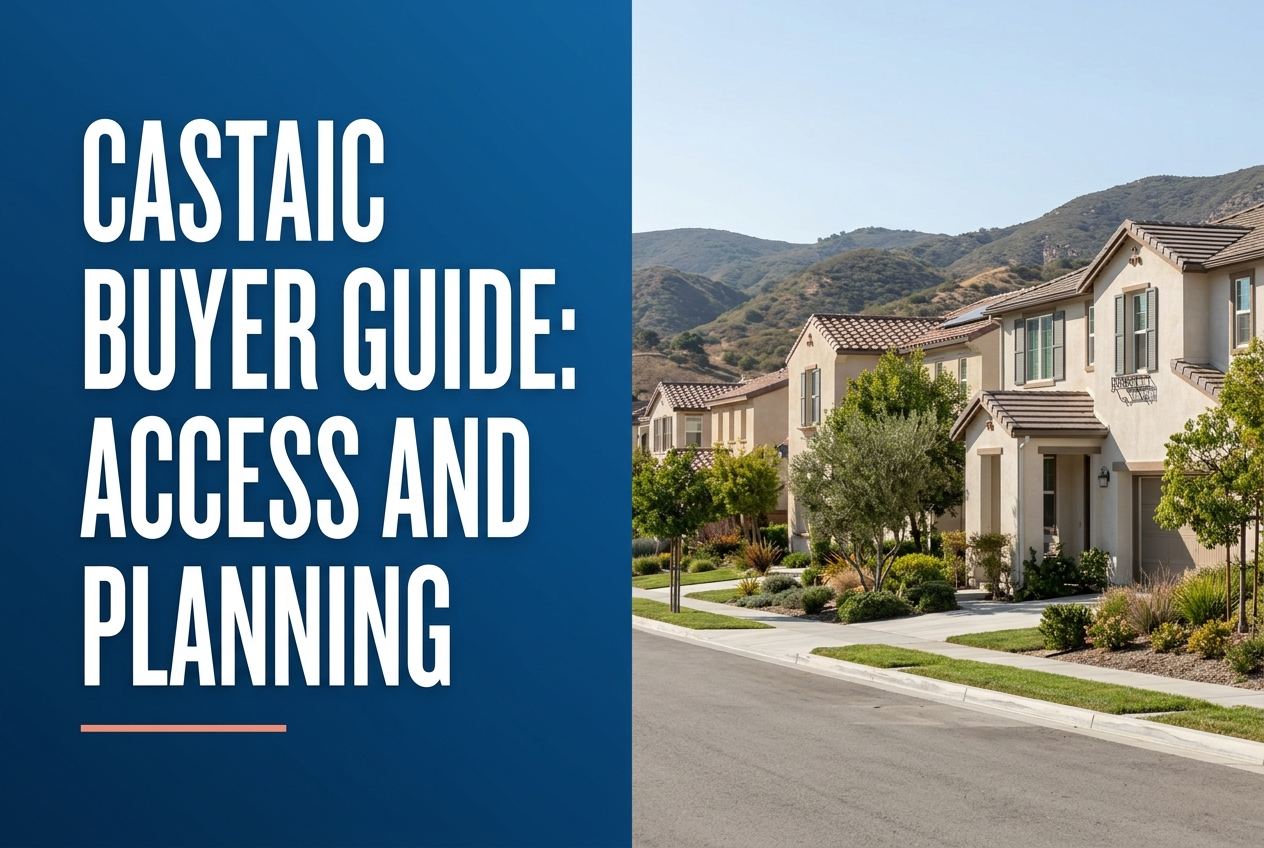
Part of Living in Castaic
Overview
If you are buying in Castaic, start with three checks: access, planning, and the physical property itself. Confirm where the parcel sits, which agency governs it, and how the lot connects to roads, transit, and nearby services before you focus on price or layout.
That matters in Castaic because unincorporated areas of the Santa Clarita Valley are covered by Los Angeles County planning, while the City of Santa Clarita and the County both shape the wider valley through linked plans. A careful buyer looks at the parcel first, then the rules around it, then the day to day use of the home.
More on that in our Castaic area guide.
Key Takeaways
- Confirm whether the property is in unincorporated Los Angeles County or within a city boundary, because that changes which planning rules apply.
- Use the Santa Clarita Valley Area Plan and related County zoning tools to understand land use, trails, and long range direction.
- Check access in a practical way by looking at road connections, nearby transit options, and how you will reach Santa Clarita services or the rest of Los Angeles.
- Review special district and maintenance details so you know who handles local services tied to the parcel.
- Look at the lot itself for drainage, slopes, easements, and any limits that may affect how you use or improve the home.
How do I tell who plans for a Castaic parcel?
The first step is to find out whether the home is in unincorporated Castaic. The County of Los Angeles says the Santa Clarita Valley Area Plan applies only to the unincorporated portions of the valley. That means the parcel may be governed by County planning even when it sits close to Santa Clarita city boundaries.
Start with the parcel record and then check the County planning page for the area plan. If a buyer does not confirm this early, it is easy to assume the wrong rules apply. That can affect how you understand allowable uses, future changes, and the review path for permits.
What does the Santa Clarita Valley Area Plan tell a buyer?
The Area Plan is part of the County General Plan and includes goals, objectives, policies, and implementation actions for the unincorporated Santa Clarita Valley. The County also notes that the Area Plan is part of a joint planning effort with the City of Santa Clarita called One Valley One Vision.
For buyers, this shows that planning in the valley is not random. The County and City use a shared framework for development and conservation across the Santa Clarita Valley. That is a reminder to ask how a property fits the larger plan, not just the current listing sheet.
How should I evaluate access before I buy?
Access means more than whether a street appears on the map. Buyers should look at how the parcel connects to main roads, whether there is a clear route to daily needs, and whether the home is easy to reach in ordinary traffic. In the City of Santa Clarita, transit and regional rail are part of the broader access picture, including Santa Clarita Transit and three Metrolink stations.
For a Castaic buyer, the practical question is how the property connects to Santa Clarita services and to Los Angeles region travel patterns. Ask where you will go for work, shopping, medical care, and appointments, then check the road network and transit options that support those trips. If a property looks simple on paper but takes extra time or extra turns to reach, that belongs in the decision.
What property details deserve extra attention in Castaic?
A buyer should review the lot itself with the same care as the neighborhood. Look for the shape of the parcel, any slope, driveway setup, and whether the home sits near open space or trail areas. The County’s Area Plan also has a Trails Map, and it was later updated through the maintenance project that incorporated the Board-adopted Castaic Trails Plan Map into the Area Plan.
That matters because trails, open space, and nearby land use can affect how a property feels and how it is used. Ask whether the parcel borders land with different uses, whether any easements cross the site, and whether future work on the home might need extra review. The goal is to understand the land, not just the house.
How do special districts and maintenance zones fit into the decision?
The City of Santa Clarita explains that Landscape Maintenance District zones are administered and maintained by the City’s Office of Special Districts and that each zone is financially independent with its own identifying number and name. Some zones cover neighborhoods, parks, shopping areas, or commercial properties in the valley.
Even when a Castaic parcel is not inside a city zone, buyers should still ask what local districts or service arrangements apply. The larger lesson is simple. You want to know who is responsible for maintenance related to the property or nearby public areas. That can help you understand service expectations before you move forward.
What should I check about zoning and future land use?
Zoning and long range land use are different, and buyers need both. The County planning page shows that the Area Plan is a policy and implementation document, while the zoning code and zone changes are separate tools. That means a buyer should not rely on one map alone and assume it tells the full story.
Look at current zoning, then ask how the Area Plan treats the area, then check whether nearby parcels have planned changes. If the property is near open land or along a trail corridor, that step is especially important. The goal is to understand what is already allowed and what might change over time, without guessing.
How can I use Santa Clarita information when I am buying in Castaic?
Even though Castaic is unincorporated, Santa Clarita matters because it is the nearest city and part of the same valley planning picture. The City profile notes that Santa Clarita sits about 30 miles north of Downtown Los Angeles and offers transit, trails, public libraries, community centers, and local services that shape daily life in the region.
For a buyer, that means the question is not just whether a home is in Castaic. It is also how the property fits into the larger Santa Clarita Valley system for commuting, errands, recreation, and services. Buyers can compare Castaic with nearby Valencia, Stevenson Ranch, Saugus, Newhall, and Canyon Country using facts, not assumptions.
Sources
- City of Santa Clarita: City Profile
- Los Angeles County Planning: Santa Clarita Valley Area Plan
- santaclarita.gov
Here is where we go deeper on it: how we help buyers in Santa Clarita. From there, our current listings show you how these differences actually show up on the ground.