New construction · Los Angeles County
New Construction in Santa Clarita: The Builder Has a Team, So Should You
Please don't visit a new construction community without us on your first visit. It's the only way we can represent you and make sure you're protected.
Most builders have a registration rule. Your agent has to come with you, or register you, the very first time you visit the sales office. If you walk in on your own first, you may lose the chance to have us represent you on that home. Some builders also count an online sign-up or a call to the sales office as your first contact. Every builder handles this a little differently, so call or text us before you go and we'll confirm the rules for that community.
Call or text before you go: 661-219-5517
New Home Communities on the Map
These are the new construction communities we found with homes for sale or coming soon across the Santa Clarita Valley. Tap a pin to see the community, then ask us about it before you plan a visit. Builders change prices and release new homes all the time, so we'll confirm what's current for you.
Communities and builder pricing checked September 13, 2026.
Every community on the map
Before you click a builder's link: do not fill in their form, and do not sign in at a sales office, without me.
Several builders treat an online registration or a walk-in as your first contact, and once that is on their record they can refuse to recognize your own agent on that purchase. It cannot be undone afterwards. Look at anything you like. Call or text me on 661-219-5517 before you register anywhere, and I will come with you the first time.
Hillcrest
Selling nowLennar · Stevenson Ranch
Single-family homes
Pricing and incentives change often. Check the builder's site, or ask us.
Valencia Collections by Lennar
Selling nowLennar · Valencia
Paired, duplex, attached, and detached homes across several collections, including Coral, Jewel, Opal, and Ruby
Pricing and incentives change often. Check the builder's site, or ask us.
Skylar II
Selling nowToll Brothers · Valencia
Single-family homes, 5 bedrooms, 3,622 to 3,903 sq. ft.
Pricing and incentives change often. Check the builder's site, or ask us.
Lark at Valencia
Selling nowTri Pointe Homes · Valencia
Single-family homes, 3 to 4 bedrooms, 2,335 to 2,822 sq. ft.
Pricing and incentives change often. Check the builder's site, or ask us.
Poppy at Valencia and Quinn at Valencia
Selling nowKB Home · Valencia
Single-family rear-garage homes in two neighboring communities
Pricing and incentives change often. Check the builder's site, or ask us.
Iris at Valencia
Selling nowKB Home · Valencia
Condominiums
Pricing and incentives change often. Check the builder's site, or ask us.
Tesoro Highlands by Lennar
Selling nowLennar · Valencia (Tesoro Highlands)
Single-family homes in the Arches and Montilla collections, plus Sierra Bella, a neighborhood for active adults 55+
Pricing and incentives change often. Check the builder's site, or ask us.
Toll Brothers at Tesoro Highlands
Selling nowToll Brothers · Valencia (Tesoro Highlands)
Single-family homes in a gated community, Bella Terra and Alta Monte collections
Pricing and incentives change often. Check the builder's site, or ask us.
Luna at Skyline
Selling nowTri Pointe Homes · Saugus (Skyline Ranch)
Detached homes, 3 to 5 bedrooms, 2,085 to 2,950 sq. ft.
Pricing and incentives change often. Check the builder's site, or ask us.
Sage at Sand Canyon
Selling nowLennar · Canyon Country (Sand Canyon)
Attached and detached homes
Pricing and incentives change often. Check the builder's site, or ask us.
Trenton Heights
Selling nowKB Home · Newhall
Single-family homes, final homes remaining
Pricing and incentives change often. Check the builder's site, or ask us.
Williams Ranch
Selling nowWilliams Homes · Castaic
Single-family homes in four collections, 3 to 5 bedrooms, 1,736 to 4,188+ sq. ft.
Pricing and incentives change often. Check the builder's site, or ask us.
The Fun Part, and the One Rule That Protects It
There is nothing like walking into a model home. Everything smells new, nothing is broken, and for once you are not imagining what a house could be, you are picking it. The floor you will stand on every morning with your coffee. The island your kids will do homework at. The corner where the tree goes in December. Most of our clients tell us this is the best part of buying, and they are right.
Here is the one thing to know before you go, and it is the whole reason this page exists. Bring us with you the first time. The friendly person in that lobby works for the builder, and if you walk in and register on your own, they are now handling both sides of your purchase. Nobody in that room is there to tell you which lot has the drainage problem, which upgrade is worth the money, or what to ask for when the completion date slips. After that first visit you are free to wander through model homes any weekend you like. If you would rather have us beside you, call and we will come.
What follows is everything we do from that first visit to the day the keys are yours: the incentives worth asking for, the design center decisions that are hard to undo, the inspections nobody tells you to order, and the warranty clocks that start the day you close. None of it is meant to take the fun out of it. It is meant to make sure that a year from now, standing in that kitchen, the only thing you are thinking about is dinner.
If you already own a home, the sale and the purchase belong on one calendar, and that is the section to read first. Selling your current home while your new one is built.
Let's talk about your next move
What You Can Actually Negotiate on a Brand-New Home
Most people walk into a sales office assuming the number on the sheet is the number, and then feel a little awkward asking for anything. Don't. Ask.
Sometimes the base price genuinely won't move, and there is a real reason for it: the builder is protecting the value of every other home it still has to sell in that community, including the one that will be next door to you. That's not a brush-off, and it is not the end of the conversation either, because the room almost always lives in the extras. That's where we go to work.
We push for builder credits you can put toward your closing costs, your design upgrades, or a lower interest rate. Many new homes in California come with solar, and this one matters more than people expect. Owning the panels, leasing them, or paying for the power under an agreement each changes your monthly budget, and each changes what happens on the day you eventually sell. We find out which one you are being handed on day one, and where there is room, we ask for credits toward the version that actually serves you.
Timing plays a part too. A finished home the builder wants closed soon has more give than one that hasn't broken ground. When an incentive is genuinely strong we will tell you so, and when it is worth going back and asking for more, we will tell you that instead. You should not have to guess which one you are looking at while standing in a room designed to make you feel certain.

The Builder's Lender or Your Own? We Run the Numbers With You
This is the part of buying new that feels like it should be simple and isn't. Builders often tie their best incentives to using their own preferred lender, and the offer is presented in the friendliest possible way, in a beautiful room, by someone who is genuinely lovely. It can be a great deal. It can also cost you more than it saves, when a big credit at closing arrives attached to a higher rate and fees you will carry for the next ten years.
So we take the feeling out of it and put the two side by side. You get a Loan Estimate from the builder's lender and from at least one outside lender, and then we sit down and compare them line by line. Jon's background is in accounting, and this is exactly where that earns its keep. We look at the rate, the points, the lender fees, and what the whole thing costs across the years you actually plan to live there, so you can see whether the fees are appropriate and which choice leaves more money in your pocket.
Sometimes the builder's lender wins. Sometimes your own lender does. Your situation decides it, not the sales office, and you make the call with every number in front of you.
Then there is the question nobody asks until too late: where is that credit even allowed to go? A builder credit will usually cover your closing costs, prepaid items like your impounds and the first HOA dues, a rate buydown, or design center upgrades. What it generally cannot become is your down payment, and your loan type sets a cap on how much of your closing costs a seller or builder is allowed to pay. A credit bigger than that cap does not vanish politely. It simply goes unused unless somebody moves it somewhere it counts, and it will not be the sales office who volunteers that.
So before you accept an incentive, we map it: what your costs really are, what your lender confirms the cap is for your loan, and which combination puts the most of that money to work for you. Sometimes that means less of it at the closing table and more of it buying your rate down, which is worth something every single month for as long as you keep the loan. Here is what buying actually costs, all four pots of it, in one place.

When a Builder May Help Lower Your Interest Rate
Of everything a builder can hand you, help with your interest rate is often worth the most, because it is the one you feel every month instead of once at the closing table. With a rate buydown the builder pays money up front so your rate, and your payment, come down. Some buydowns are temporary and lower the rate for the first year or two before it steps back up. Others lower it for the life of the loan.
These offers change constantly, vary from builder to builder, and usually come with conditions, like using the builder's lender or closing by a certain date. So we ask what is genuinely available on the day you are ready. Then we compare the buydown against using that same money another way, like a credit toward your closing costs, and help you pick the one that fits how long you honestly think you will be in this house.
One caution, because it is the trap in this part of the deal. A temporary buydown feels wonderful in year one, and year one is the year you are being sold. Year three is the year you have to live in. So that is the payment we make sure you have looked at, with your eyes open, before anybody signs anything.
Which Upgrades to Buy From the Builder, and Which to Do Later
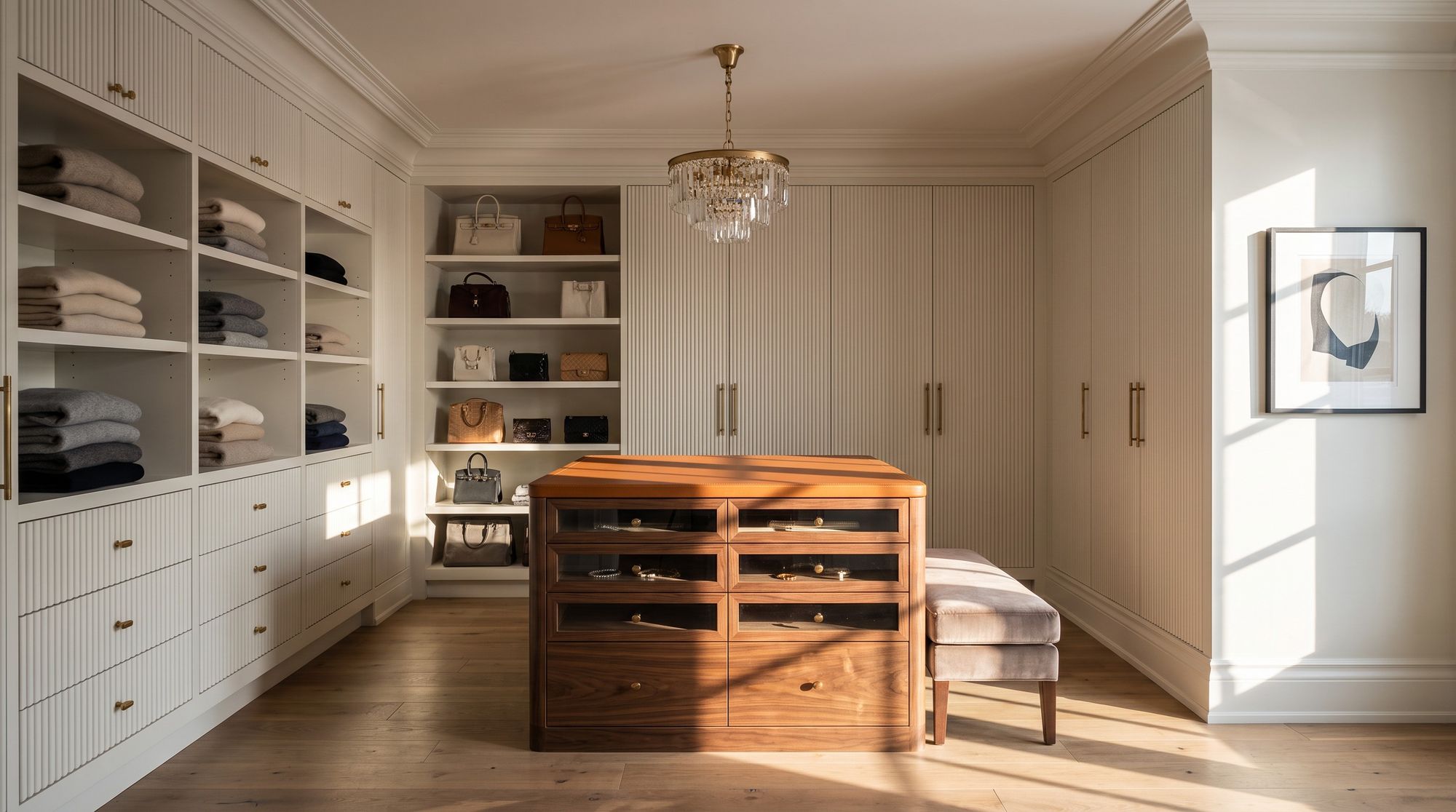
The design center is where budgets quietly double, and the rule for keeping yours intact is simpler than it looks. If it lives behind the wall or under the floor, buy it now. If you could change it on a Saturday with a screwdriver, do it later.
Worth buying from the builder: anything structural, extra outlets and switches, wiring runs for internet or speakers, an electric car circuit in the garage, plumbing rough-ins, a bigger slider or an extra window, upgraded insulation, and any change to the floor plan itself. Once the drywall is up, that work costs several times more, and some of it cannot be done at all.
Usually cheaper after you close: light fixtures, mirrors, blinds and window coverings, closet organizers, a backsplash, and most landscaping. Builders mark those up, and because the cost rolls into your loan, you pay interest on that markup for as long as you own the home. Check your HOA rules and your warranty before you change anything outside, and if you are planning to do the yard yourself, tell us early, because it changes what we ask the builder to leave undone.
We walk into the design center with you and your budget, and we are honest about the ones we would skip. That conversation has saved our clients real money, and it is a lot easier to have before you fall in love with a $14,000 kitchen option.
Why a Brand-New Home Still Needs an Independent Inspection
New doesn't mean perfect. A new home is built by many different crews working on a tight schedule, and small misses happen. A vent that never got connected. A gap in the insulation. Grading that sends rainwater toward the house instead of away from it. The builder runs its own checks and the local building department signs off on code, but neither one is there to look out for you.
We recommend hiring your own licensed, independent inspector. On a home that's still being built, the best time is twice: once before the drywall goes up, while the framing, plumbing, and wiring are easy to see, and again before your final walkthrough. If the home is already finished, one thorough inspection before the walkthrough does the job. Some builders limit when an inspector can be on site, so we ask about their policy before you sign. Anything your inspector finds goes on the builder's list to fix before closing, which is so much easier than chasing a repair after you've moved in.
A few hundred dollars now, spent while the builder still has every reason to keep you happy, against a leak you are arguing about next winter with your furniture already in the room. That is the whole trade, and it is not a close call.
Why a Brand-New Home Still Needs an Independent Inspection
Somebody has to check the work
The Walkthrough, the Punch List, and the Clocks That Start at Closing
The final walkthrough is not a tour. It is your one clean shot at having the builder fix things while they still have every incentive to do it, which is before your money changes hands. So we go room by room with you, slowly, with a list: every outlet tested, every window and slider opened and closed, cabinet doors and drawers, paint and drywall under good light, tile and grout, the water heater and the furnace, the irrigation, and the grading around the house, because water running the wrong way is the one that gets expensive later.
Everything we find goes on a written punch list with dates, and we stay on it until each item is signed off. If something cannot be finished before closing, we want it in writing with a date on it rather than a promise in a hallway.
Then the clocks start, and California gives different parts of your home different ones. Under the state's construction defect law the window runs four years from close of escrow for plumbing, sewer and electrical systems, five years for paint and stains, two years for landscaping systems and dryer ducts, and one year for irrigation and drainage [verified 2026-09-17 against California Civil Code 896]. Your builder's own written warranty is a separate promise on top of that, usually with its own shorter list for cosmetic items, so we get a copy and read it with you.
The week you close, we put those dates on your calendar. Most people never look at their warranty until something breaks, and by then one of those windows has often quietly closed.
The Walkthrough, the Punch List, and the Clocks That Start at Closing
The room they grow into
Your Deposit, How to Protect It, and When It Stops Being Refundable
Buying new construction usually means putting money down long before there is a house to stand in. There's often a deposit when you sign, and sometimes more when you choose your upgrades at the design center, which is a lovely afternoon that quietly turns into a large number. That is real money, out of your hands, months before you get keys, and you deserve to know precisely when it stops being refundable.
Every builder writes its own purchase agreement, and the deposit terms live there. Before you sign, we go through it with you. We look at where your deposit is held, what has to happen for you to get it back, and the point when it becomes non-refundable. That point often arrives once the contingency periods in the agreement end. Payments for design upgrades are often non-refundable as soon as they're ordered, because the builder is buying materials for your specific home.
Terms differ from one builder to the next, so read your purchase agreement carefully and confirm the details with us before any money changes hands. If you'd like a legal opinion on the contract, we'll encourage you to have a real estate attorney review it too.
Selling Your Current Home While Your New One Is Built
If you own a home now, this is the part that keeps people awake, and it is worth saying plainly: the thing that goes wrong here is almost never the price on either house. It is the order of events. Sell too early and you are looking for somewhere to live while a builder finishes. Sell too late and you are carrying two mortgages, or you cannot qualify for the new loan at all.
Some builders will accept a purchase that depends on selling your current home, and many won't, especially on a house that is already finished. So we plan both sides as one move rather than two. We start with a real number for what your current home is worth, and you can ask for that today without committing to anything. Then we work backward from the builder's estimated completion date to choose when to get your home ready, when to list, and when to close.
If the dates don't line up perfectly, we'll talk through options like a short rent-back after your sale, and we'll connect you with a lender to ask whether bridge financing makes sense for you. What you get is one plan with both homes on the same calendar, so you are never guessing where you will be sleeping in March. Here is how we sequence a sale and a purchase together, and here is how we sell a home.
Lining Up Your Move Date With the Builder's Timeline
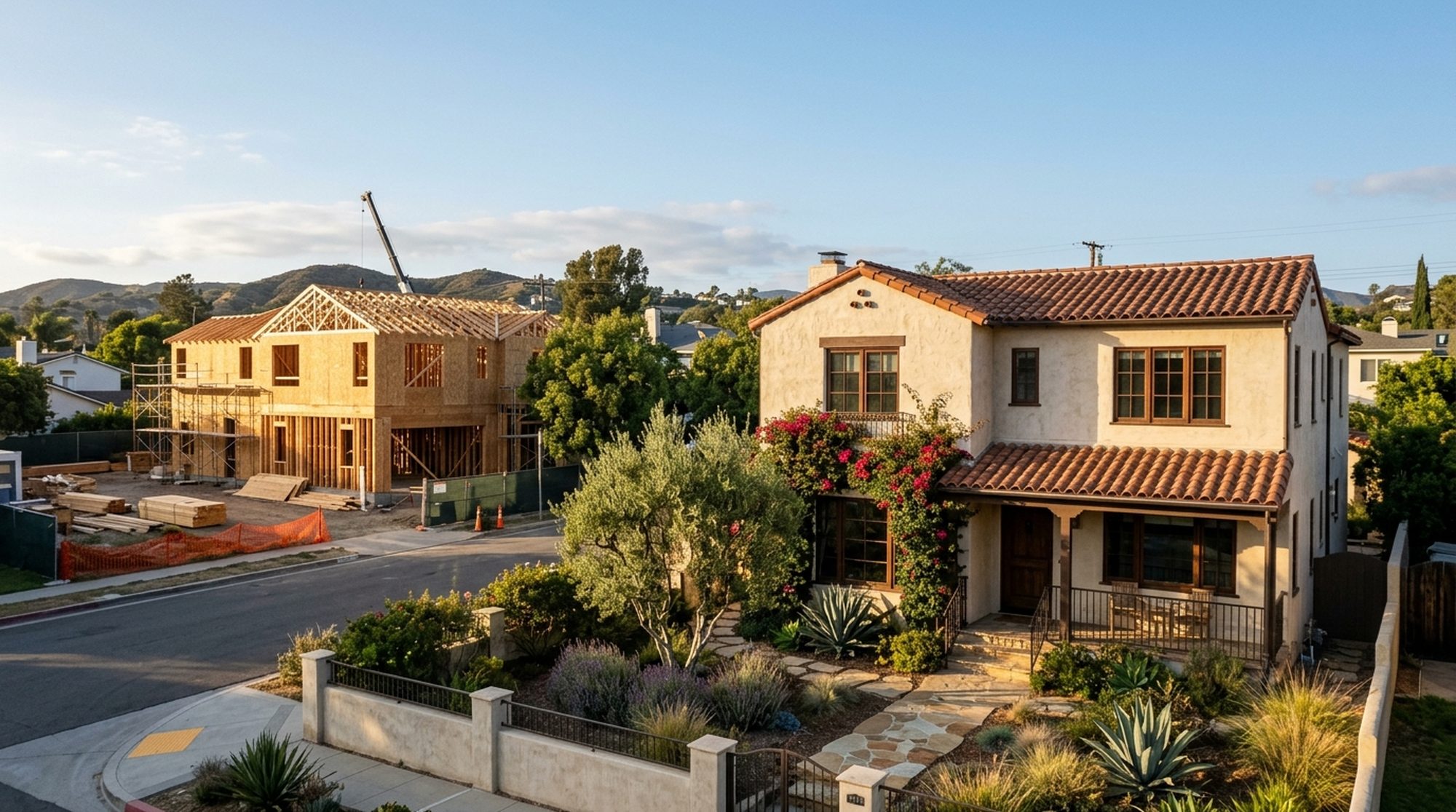
A builder's completion date is an estimate, and estimates move. Weather, materials, inspections, and permits can all push a finish date back by weeks. When your lease ends on a set day or your current home is already in escrow, a shifting date can turn excitement into stress fast.
We stay in touch with the builder's team during the build, so you hear about changes early instead of the week before. We help you plan a little breathing room into your lease, your sale, and your movers. We also look closely at your rate lock. Locking a rate for a long build can cost more, and if the finish date slips past your lock, you'll want to know ahead of time who pays to extend it. With the right cushion, moving day feels like a celebration instead of a scramble.
How We Help, From Your First Visit to the Day You Get the Keys
It starts before you ever walk in. We register you with the builder, help you compare communities, and tell you what we know about the floor plans, the lots, and the incentives running right now. On your first visit we are right there beside you, asking the questions that are very easy to forget when you are standing in a beautiful model home and can already picture your own furniture in it.
When you find the one, we review the purchase agreement with you, negotiate your incentives, and compare lenders side by side. We walk into the design center with you and your budget, so the upgrades you love don't quietly add up into a number you would not have agreed to on paper. During the build we stay in touch with the builder, schedule your inspections, and keep your move on track.
At the final walkthrough we go room by room with you and make sure every item on the list is handled before your money moves. After you are in, we remind you to use your builder's warranty before its coverage periods quietly end.
It is the same representation we give a buyer on a resale, pointed at a different set of risks. Here is that process in full, and if this is your first purchase, start here instead. Looking at a community somewhere else in the county? Here is how we work the rest of Los Angeles County. What you get either way is education instead of pressure, and a phone that Michelle answers herself, the whole way through.
Found a Community You Love? Call Us Before You Go
Call or text us at 661-219-5517 before your first visit. We'll confirm the builder's registration rules for that specific community, set up the appointment, and meet you there. It costs you nothing and it is the one step that cannot be taken back later.
If you own a home now, ask for your home value and we'll show you how your equity fits into the plan for the new one. If you are buying your first home, our buyer's guide has the lender document list and the real budget math, and the full buying process is here.
This page shares our general approach and is not legal, tax, or lending advice. Builder rules, prices, and incentives change often, so confirm current details with us.
Found a Community You Love? Call Us Before You Go
Summer, six months a year
Frequently Asked Questions
Do I really need you with me on my first visit to a new home community?
Can you negotiate the price of a new construction home?
Should I use the builder's preferred lender?
What is a rate buydown?
Do I need a home inspection on a brand-new home?
When does my deposit on new construction become non-refundable?
Can I buy new construction before I sell my current home?
What happens if the builder's completion date moves?
What's the difference between a finished home and a to-be-built home?
Do you help with new construction outside the Santa Clarita Valley?
Keep exploring
Ready to make your move with Dubner Real Estate Group?

Meet the team
You would be working with us
We are Michelle and Jon Dubner, husband and wife, and Dubner Real Estate Group is ours. Our team is here to serve you: to understand what you are hoping for, walk you through it step by step, and make sure you get there. Michelle answers her own phone and is quickest by text, so ask us anything, at any point, however small it feels.
Michelle Dubner DRE #01496647 Jon Dubner DRE #02118617 Equity Union