2026-09-05 · 9 min read · Santa Clarita · last reviewed 2026-09-17
By Michelle Dubner, REALTOR® · DRE #01496647 · Dubner Real Estate Group
How to Compare Santa Clarita Communities Beyond the Photos
How can I tell if a home is in the City of Santa Clarita or unincorporated Los Angeles County?
Listing photos show finishes. Buyers should compare Santa Clarita communities by what can change, what cannot, and how the area is planned, zoned, and connected to the rest of Los Angeles.
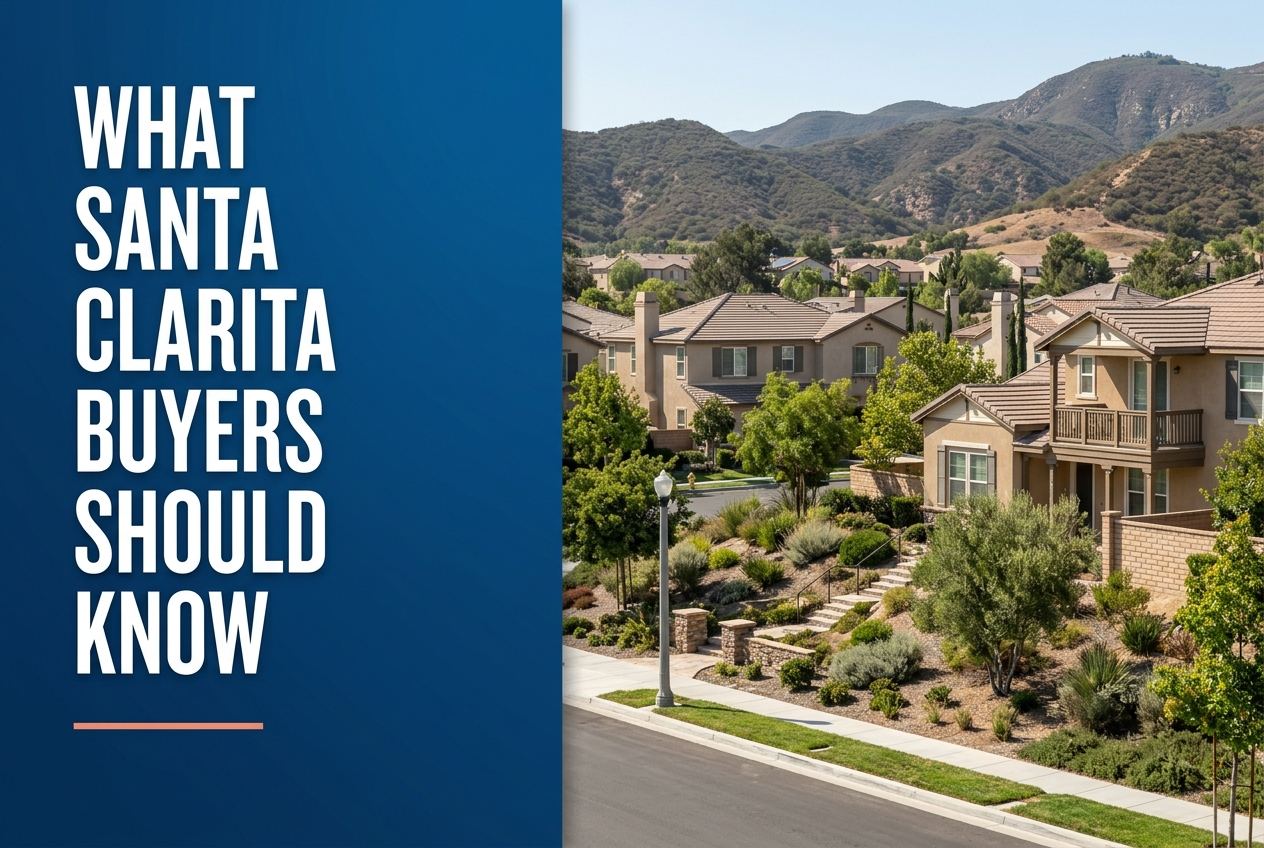
Part of Buying a home
Overview
Buyers should compare Santa Clarita communities by looking past the photos and into the rules, layout, and daily connections that shape each area. Start with whether the property is in the City of Santa Clarita or in unincorporated Los Angeles County, then check the land use and zoning that guide what can happen around it.
Photos can tell you what one home looks like today, but they do not tell you how a community is governed, how it is planned, or how easy it is to move through it. Buyers should compare Santa Clarita this way so the decision is based on the full picture, not just the staging.
If you are weighing a move, start with how we prepare a home for market.
Key Takeaways
- Check whether the home is inside the City of Santa Clarita or in unincorporated Los Angeles County, because the planning authority can differ.
- Compare land use and zoning before comparing finishes, since these govern how property can be used and what can be built or changed.
- Use the Santa Clarita Valley Area Plan and the City of Santa Clarita General Plan as context for how the valley is planned.
- Look at access to trails, parks, transit, and Metrolink stations if day-to-day movement matters to you.
- Compare neighborhood access to Old Town Newhall, community centers, libraries, and city events, not just the home interior.
- Ask for a local review of the property’s exact parcel details before you rely on a map or listing photo.
What should buyers check first about a Santa Clarita community?
Start with the simplest question. Is the property inside the City of Santa Clarita, or is it in unincorporated Los Angeles County. That matters because the planning rules and review process can be different depending on where the home sits.
The City of Santa Clarita includes communities such as Saugus, Newhall, Valencia, and Canyon Country, and buyers should also compare nearby areas like Stevenson Ranch and Castaic. The point is not to assume every Santa Clarita address works the same way. Two homes that look similar in photos can sit under different local rules and in different community settings.
How do land use and zoning change the comparison?
Land use and zoning tell you much more than a listing photo can. LA County Planning explains that land use and zoning are main factors for how property can be used. They describe how many units can be created, where and what kinds of businesses can operate, and how development must be designed for a specific location.
For buyers, that means the comparison should include what surrounds the home and what is allowed nearby. Zoning lists allowable uses and design requirements, and every property in the County has a specific zone. When comparing communities, look at the property’s plan category and zone because those details affect the long-term context around the home.
Why does the area plan matter when you compare neighborhoods?
The Santa Clarita Valley Area Plan is part of the County General Plan and applies to unincorporated parts of the Santa Clarita Valley. The County says it is part of a joint planning effort called One Valley One Vision with the City of Santa Clarita. The City of Santa Clarita General Plan and the County’s Area Plan together provide a unified vision for development and conservation across the valley.
That makes the area plan useful for buyers who want to understand the bigger picture. Instead of judging a community by a few listing images, ask how the surrounding area is intended to develop or be conserved. That is a grounded way to compare Valencia, Stevenson Ranch, Saugus, Newhall, Castaic, and Canyon Country within the larger Santa Clarita area.
What daily features should buyers compare beyond the home itself?
The City profile highlights many community features that help buyers compare one area with another. Santa Clarita has more than 100 miles of off-street trails and paseos, dozens of parks, open space, and City facilities such as libraries and community centers. Those are the kinds of details that shape how a community functions from day to day.
If two homes have similar interiors, the better question may be which one gives easier access to the places you actually use. The City also hosts events, classes, and public spaces, including Old Town Newhall, Canyon Country and Newhall Community Centers, and Santa Clarita Public Library branches. Those are practical comparison points because they show what is close by and how the area is organized.
How do transportation and access affect community comparison?
Photos do not show how a community connects to the rest of Santa Clarita or Los Angeles. The City of Santa Clarita says Santa Clarita Transit offers trip options for residents, and the city is home to three Metrolink stations. For buyers who commute, travel often, or want transit options nearby, that is a meaningful way to compare communities.
The city is also described as being about 30 miles north of Downtown Los Angeles. That does not tell you which neighborhood to choose, but it does explain the region buyers are comparing. If access matters to you, compare the property’s location in relation to major roads, transit, and the daily routes you expect to use.
What should buyers look for when comparing community upkeep and services?
A listing photo can hide or highlight surface details, but it cannot show how a city maintains shared spaces. The City profile says Santa Clarita pays attention to roads, streets, bridges, sidewalks, and infrastructure, and that its graffiti team removes 99% of incidents within 24 hours. Those facts do not rank a neighborhood, but they do help buyers understand the city services around the home.
Buyers can also compare how a city gathers input and handles requests. Santa Clarita uses public opinion polls, City Council meetings, the Resident Service Center, social media, newsletters, and community meetings to gather feedback and share updates. That matters if you want to know how local issues are raised and followed up.
How do you compare a specific property without getting stuck on appearance?
Use photos as a starting point, not the deciding factor. Then ask for the parcel’s exact location, its jurisdiction, and the zoning or land use context. The county explains that land use policy describes the basic type and intensity of uses, while zoning lists the allowable uses and design requirements. Those are the facts that help you compare one Santa Clarita property with another.
A useful comparison also includes the nearby places you will actually experience, such as parks, trails, transit, libraries, community centers, and activity hubs like Old Town Newhall. That gives you a clearer view of how the community is organized and what day-to-day life may involve in Santa Clarita and in the broader Los Angeles area.
Sources
- City of Santa Clarita: City Profile
- Los Angeles County Planning: Santa Clarita Valley Area Plan
- California Department of Insurance: Residential Insurance Guide
- SCV Water: Water Quality
- Los Angeles County Planning: Land Use and Zoning
For a fuller walk through, read the step by step buying process we use. If the search is still wide open, start with how the six Santa Clarita communities compare.