2026-10-07 · 7 min read · Santa Clarita
By Michelle Dubner, REALTOR® · DRE #01496647 · Dubner Real Estate Group
How Do I Check a Santa Clarita Parcel First?
How Do I Check a Santa Clarita Parcel First?
Before you choose a Santa Clarita neighborhood, start with the parcel. The city or county line, the land use rules, and the zoning record tell you much more than a map pin or a listing photo. Michelle and Jon explain the first checks we would make and why they matter.
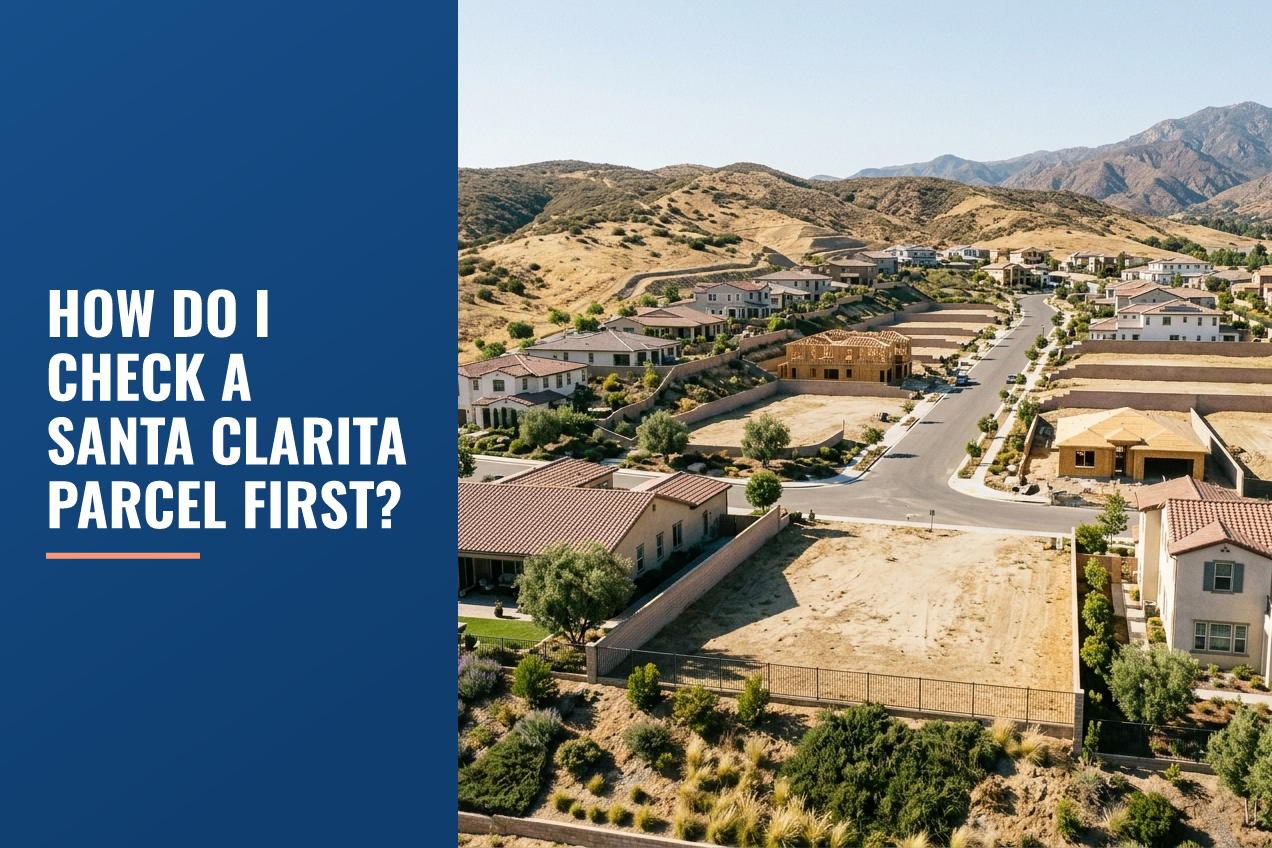
Part of Buying a home
Overview
Start with the parcel, not the neighborhood name. In Santa Clarita, the first thing we would verify is whether the property is inside the City of Santa Clarita or in unincorporated Los Angeles County, because that changes which public rules apply. That matters whether you are looking in Valencia, Stevenson Ranch, Saugus, Newhall, Castaic, or Canyon Country.
From there, we would check the land use and zoning record, then confirm whether the Santa Clarita Valley Area Plan applies. That order helps buyers compare homes with facts instead of guesses, and it keeps you from relying on a neighborhood label alone.
Key Takeaways
- The first neighborhood check is jurisdiction, meaning city or unincorporated county.
- Land use and zoning are different and both matter for how a property can be used.
- The Santa Clarita Valley Area Plan applies only to the unincorporated parts of the valley.
- A parcel’s rules can affect what you may build, what uses are allowed, and what approvals are needed.
- Water quality information is another early due diligence step, not a last-minute one.
For broader context, compare this question with our Santa Clarita buyer guidance and the steps in our buying process.
What should I verify before I even compare neighborhoods?
We would begin with one simple question. Is the parcel in the City of Santa Clarita or outside the city in unincorporated Los Angeles County? That matters because the City and the County do not use the same planning system for every property.
The City of Santa Clarita profile says the city includes communities such as Saugus, Newhall, Valencia, and Canyon Country, but a community name alone does not tell you which rules govern a specific address. The address has to be checked on the public record.
Tell us what you are looking for.
There is no search box on this site on purpose. Tell Jon and I what matters to you and we will send real homes that fit, with an honest line on each one.
Start my home searchWould you rather just talk? 661-219-5517
Why does city versus county change the search?
LA County Planning says it is the planning department for land outside a city and in unincorporated Los Angeles County. It also says the County General Plan guides how and where unincorporated County will grow.
For buyers, that means the first branch in the decision tree is not style or price. It is jurisdiction. Once you know who governs the parcel, you can ask the right follow-up questions instead of mixing city rules with county rules.
What is the difference between land use and zoning?
County Planning explains that land use and zoning are both main factors for how you can use property. Land use describes the type and intensity of uses, while zoning lists allowable uses and design requirements.
That is why a buyer should not stop at a neighborhood label. A parcel can sit in a place that sounds familiar, yet the land use category and the zoning details are what tell you how the property is actually governed. If you are trying to understand what is possible on the lot, these are the records to read first.
How does the Santa Clarita Valley Area Plan fit in?
The Santa Clarita Valley Area Plan applies only to the unincorporated portions of the Santa Clarita Valley. The County page also says the plan is part of a joint planning effort with the City of Santa Clarita called One Valley One Vision.
For a buyer, the practical point is simple. If the parcel is in unincorporated Santa Clarita Valley, we would verify the Area Plan before we go any farther. It helps explain the county-level framework that sits over the property and keeps the search organized from the start.
What would we verify first?
First, we would confirm the parcel location in the city or county record. Second, we would check the land use and zoning that apply to that exact address. Third, we would see whether the Santa Clarita Valley Area Plan is part of the picture.
That order keeps the search calm and organized. It also helps us spot when a listing description is too broad or when a neighborhood name does not match the public record. In our process, the parcel comes first because the parcel drives the rules.
How should buyers use insurance information in the search?
The California Department of Insurance Residential Series is a useful reminder that homeowners insurance deserves an early look, not a last-minute one. The guide collection covers topics such as wildfire response and readiness, earthquake insurance, homeowners and renters insurance, and claims.
We would not use insurance as a shortcut to pick a neighborhood, but we would treat it as part of the parcel review. If you are comparing homes, it is smart to understand the insurance questions that may come with the property before you move too far down the path.
Where does water quality fit into parcel due diligence?
If water matters to you, review SCV Water’s water quality page early in the process. It is another public source to check while you are sorting through a property, not after you have already narrowed your search to one home.
That check does not replace land use or zoning research. It simply adds one more practical layer to the decision so you can ask better questions before you write an offer or commit to a neighborhood.
How can buyers keep the search practical from the start?
Use the same order every time. Confirm the jurisdiction, check land use, review zoning, and then look at any area plan or utility information that applies to the parcel. When you do that, you can compare homes in Valencia, Stevenson Ranch, Saugus, Newhall, Castaic, and Canyon Country using the same standards.
That approach is especially helpful when two homes look similar in photos but sit under different rules. The public record gives you the framework, and the framework tells you what to expect next.
Next step
If you are choosing a Santa Clarita neighborhood, start with the parcel record and build from there. When the jurisdiction, land use, zoning, and related public sources are clear, the rest of the search becomes easier to compare and easier to trust.
If you want help reading a Santa Clarita parcel the right way, we can walk you through the first checks before you tour homes.
If you want help applying these checks to a particular property, contact Michelle and Jon before relying on a general online summary.
Frequently Asked Questions
Can I trust a neighborhood name to tell me the rules?
Does the Santa Clarita Valley Area Plan apply to every home in Santa Clarita?
Why does zoning matter if I only want to live in the home?
What if a listing sounds different from the public record?
Should buyers think about insurance this early?
Where can I fit water quality into my search process?
Tell us what you are looking for.
There is no search box on this site on purpose. Tell Jon and I what matters to you and we will send real homes that fit, with an honest line on each one.
Start my home searchWould you rather just talk? 661-219-5517