2026-11-05 · 8 min read · Santa Clarita
By Michelle Dubner, REALTOR® · DRE #01496647 · Dubner Real Estate Group
Repair or Replace After Termite Damage?
Repair or Replace After Termite Damage?
When termite damage shows up in a Santa Clarita home, the first question is not whether to panic. It is whether the damaged wood can be repaired or needs to be replaced. That choice affects cost, timing, permits, and how much of the home you have to open up.
Part of Buying a home
Overview
If you find termite damage in Santa Clarita, the first question is usually repair or replace, and the answer depends on how deep the damage goes. In Santa Clarita and across Los Angeles County, the right choice protects the structure, your budget, and your timeline.
The short version is this. Cosmetic damage can often be patched. Structural damage may need replacement. The hard part is figuring out which kind you have before you pay to fix the wrong thing.
Key Takeaways
- Shallow damage to trim, drywall, or other non-structural wood may be repairable.
- If wood that carries weight is damaged, replacement may be the more informed path.
- Termites must be treated before repair work starts, or the wood can be damaged again.
- A structural engineer can help sort out how far the damage runs when the problem looks serious.
- Jon and I would verify the scope, the license, and whether the work needs local permit review before anyone starts.
For broader context, compare this question with our Santa Clarita buyer guidance and the steps in our buying process.
What is the first thing to figure out?
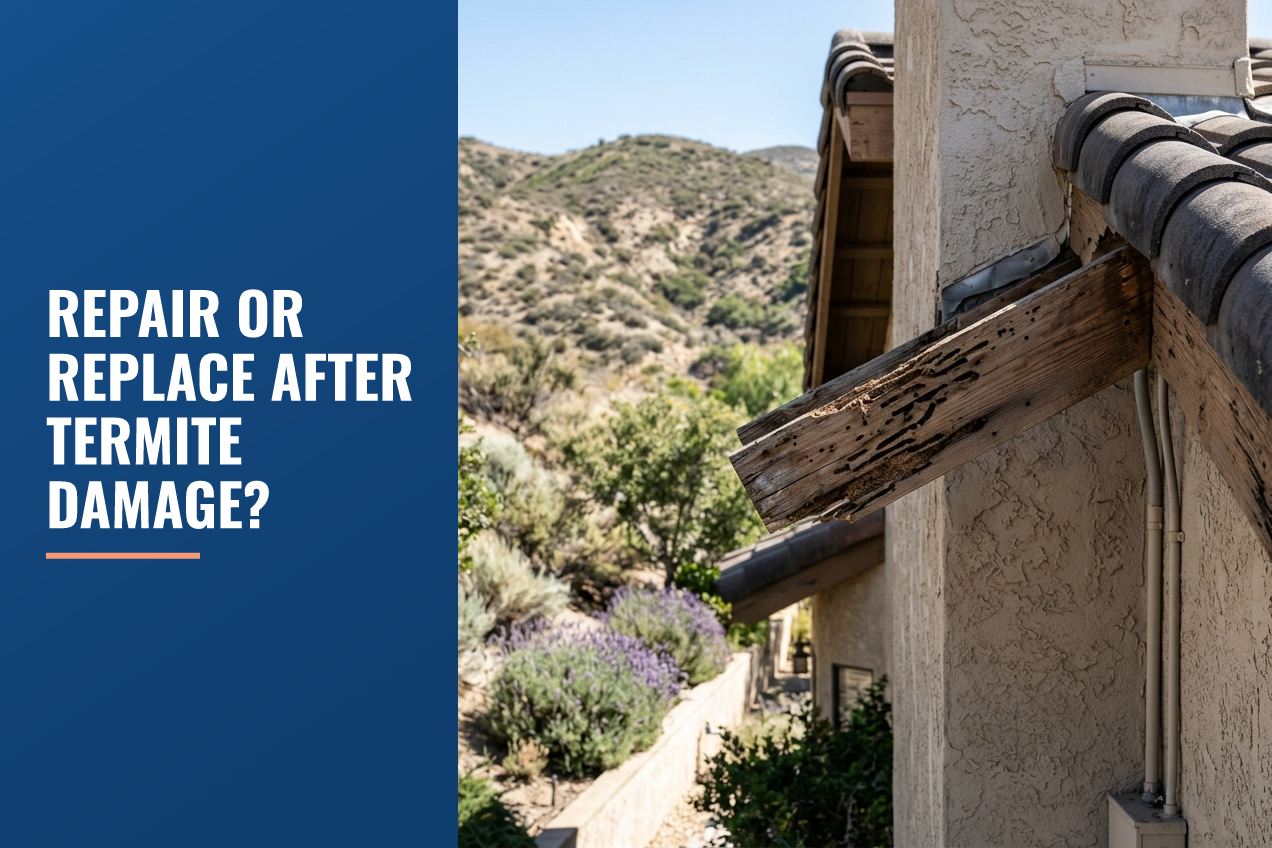
First, you need to know whether the termite damage is cosmetic or structural. Cosmetic damage is the kind you can see and touch, like trim, baseboards, door casings, or a small patch of drywall. Structural damage affects parts of the home that carry weight, such as beams, subfloors, joists, sill plates, or load-bearing walls.
That matters because a bubbled paint spot may hide much more damage behind the wall. The KHTS lead notes that drywood termites can live inside the wood they eat, and the damage is often deeper than it looks. If you only fix the surface, you may leave weak wood hidden in the framing.
Tell us what you are looking for.
There is no search box on this site on purpose. Tell Jon and I what matters to you and we will send real homes that fit, with an honest line on each one.
Start my home searchWould you rather just talk? 661-219-5517
When does repair make sense?
Repair makes sense when the damage is shallow and limited to wood that does not hold up the house. That often includes trim, baseboards, window casings, door frames, or a small section of drywall. In those cases, a carpenter can cut out the damaged area, replace it, fill it, and repaint.
The honest tradeoff is that repair is cheaper and faster, but only if the damage really stays shallow. If the inspector cannot tell how far the termites traveled, a patch can be false comfort. You may save money today and spend more later if the hidden damage was larger than it looked.
When does replacement become the better choice?
Replacement becomes the more practical answer when the wood has stopped doing its job. That can show up as sagging beams, springy floors, sticking doors, or framing that no longer feels solid. At that point, reinforcing the old wood may not be enough because the damaged piece can no longer safely carry weight.
This is where the repair-versus-replace decision changes from cosmetic to structural. The KHTS lead explains that major structural repairs can involve replacing support beams, subfloors, or load-bearing walls. Those jobs usually take more time, more coordination, and more disruption inside the home.
What should Jon and I verify first?
Jon and I would verify three things first. One, whether the termite treatment has already been handled or still needs to happen. The KHTS lead is clear that the colony has to be treated before wood repairs begin. Two, we would confirm the scope of damage so you know what is actually affected. Three, we would check whether the work needs local permit review before anyone starts opening walls or replacing framing.
That order matters because it keeps you from paying for the same problem twice. If termites are still active, new lumber can be damaged again. If the repair plan is too small, you can end up opening the wall a second time later. Our job at this stage is to slow the process down just enough to get the sequence right.
What documents or decisions do you need before work starts?
Before the first hammer swings, you need a clear scope of work. That means knowing which parts will be treated, which parts will be repaired, and which parts will be replaced. If the damage is severe, a structural engineer report can help explain how far the problem reaches and what needs to come out.
You should also get the contractor’s license information, insurance proof, and payment schedule in writing. The KHTS lead says to check the pest control company and the repair contractor separately, which is useful because termite treatment and carpentry are different jobs. The tradeoff is time spent checking details now instead of guessing later.
How do permits and local rules fit in?
Cosmetic fixes may not need permit review, but structural repairs often do. That is why you do not want to assume the process will be the same for a quick patch and a beam replacement. If you are buying in Santa Clarita or elsewhere in Los Angeles County, the most reliable move is to confirm the permit path before repairs begin.
This is one of those steps that feels small until it becomes a problem during a sale or future remodel. Unpermitted structural work can slow a later transaction because someone may need to reopen the wall and document what was done. Asking early protects you from a second round of surprises.
How does this affect a buyer in Santa Clarita?
If you are buying a home, termite damage is not just a repair issue. It can change how you judge the house itself. A home with shallow damage and a clear repair plan is different from a home with hidden structural loss and no clear answer yet. The first one may be manageable. The second one may need more money, more time, and more patience before you feel comfortable moving forward.
That is why we look at the problem in layers. First the treatment. Then the inspection or engineering review. Then the repair scope. Then the permit question. When you work in that order, you are making a choice based on facts instead of fear.
What is the honest tradeoff between patching and replacing?
Patching is usually less expensive and less disruptive. Replacement is usually more complete and more reassuring. The tradeoff is simple but not easy. If the damage is small, patching may be enough. If the damage is deep, replacement may be the only way to restore the home’s structure and stop the problem from spreading.
So the goal is not to choose the cheapest path. The goal is to choose the right one. In a Santa Clarita home, especially one that has aged enough to attract termites, that usually means slowing down long enough to understand what the wood is telling you before you decide how much to open up.
Next step
If you are dealing with termite damage in Santa Clarita, you do not have to solve it all at once. Start with treatment, confirm the real scope, and then decide whether repair or replacement fits the wood in front of you. That sequence protects your money, your time, and the next step in the sale or move.
If you want, we can help you think through the repair-versus-replace questions before you move forward.
If you want help applying these checks to a particular property, contact Michelle and Jon before relying on a general online summary.
Sources
Frequently Asked Questions
Can termite damage always be repaired without replacing wood?
Why does termite treatment come before repair?
What are examples of damage that may only need repair?
What are signs that replacement may be needed?
Do I need an engineer for every termite problem?
What should a buyer ask before agreeing to a termite repair credit?
Tell us what you are looking for.
There is no search box on this site on purpose. Tell Jon and I what matters to you and we will send real homes that fit, with an honest line on each one.
Start my home searchWould you rather just talk? 661-219-5517