2026-10-16 · 8 min read · Santa Clarita
By Michelle Dubner, REALTOR® · DRE #01496647 · Dubner Real Estate Group
What Is Non-Functional Turf in Santa Clarita?
What Is Non-Functional Turf in Santa Clarita?
A new SCV Water workshop is a reminder that some Santa Clarita properties sit next to turf rules that are changing on a schedule. Here is what non-functional turf means, who it affects, and what Jon and I would verify before a buyer assumes a yard, median, or HOA common area will be handled the same way after closing.
Part of Buying a home
Overview
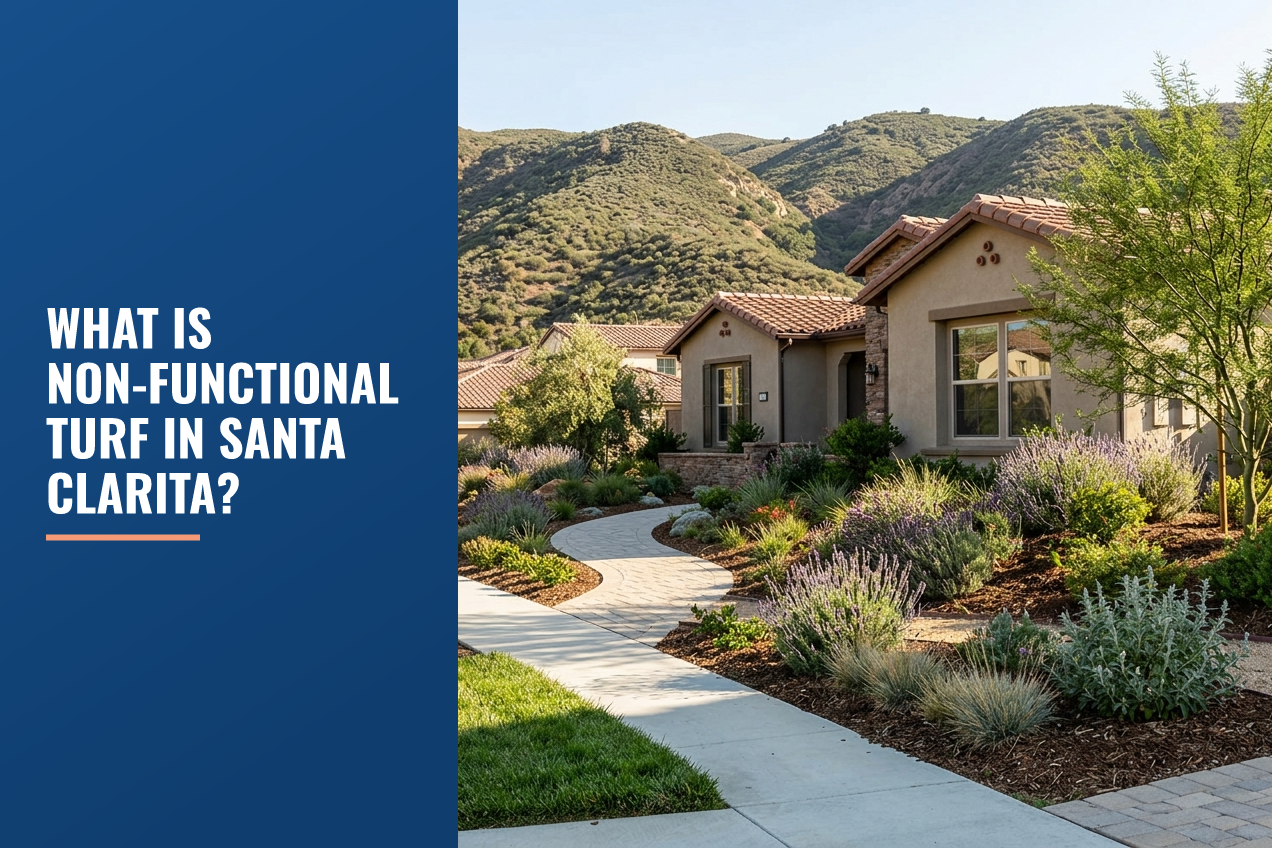
If you are buying in Santa Clarita, non-functional turf matters when the property is tied to an HOA, commercial area, or shared landscape that may be covered by California Assembly Bill 1572. According to SCV Water’s workshop notice reported by KHTS, the law prohibits potable water for irrigating non-functional turf, which the state defines as mowed decorative grass that is not used for human recreation.
For a buyer, that is not a yard-care trivia question. It is a clue that the way nearby common areas are watered, maintained, and budgeted can change after closing. The limit does not apply to residential customers, but it can matter if you are looking at a home inside an HOA or next to landscaped spaces that belong to an association or another organization.
Key Takeaways
- AB 1572 bans potable water for irrigating non-functional turf.
- The law applies to mowed decorative grass that is not used for human recreation.
- KHTS reported that SCV Water and CalWEP held a free workshop for affected organizations in Santa Clarita.
- The state deadline differs by property type, and the law does not apply to residential customers.
- Buyers should verify whether nearby turf is private, shared, or governed by an HOA before relying on assumptions.
For broader context, compare this question with our Santa Clarita buyer guidance and the steps in our buying process.
What counts as non-functional turf?
The official state rule says non-functional turf is mowed decorative grass that is not used for human recreation. That means the lawn is there to look finished, not to serve as a place people actually use for play or other activity. The distinction sounds small, but it changes how you think about landscape areas around a property.
In the KHTS report, SCV Water said the workshop was for public agencies, HOAs, and commercial, industrial, and institutional properties that may be impacted by AB 1572. For a buyer, the key point is simple. The label is about how the turf is used, not just whether it looks like grass. That can come up in neighborhoods from Valencia to Saugus, and in nearby communities like Newhall, Castaic, and Canyon Country where shared landscaping is part of the streetscape.
Tell us what you are looking for.
There is no search box on this site on purpose. Tell Jon and I what matters to you and we will send real homes that fit, with an honest line on each one.
Start my home searchWould you rather just talk? 661-219-5517
Why should a home buyer care?
Most buyers think first about the inside of the house, but some of the money and upkeep around a home lives outside the fence line. If a property sits in an HOA or near shared landscaping, those areas can affect dues, maintenance planning, and how the neighborhood handles landscape changes over time. Even if the yard itself looks ordinary, the ownership and water source behind the scenes can be very different.
That does not mean every buyer needs to worry about AB 1572. The KHTS report says the law does not apply to residential customers. But if you are comparing homes in Santa Clarita or elsewhere in Los Angeles County, it is still smart to ask whether the nearby turf is private yard space, HOA common area, or a landscaped strip that belongs to a larger property. That question is especially useful when a listing sits near larger master planned areas or shared greenbelts.
What does the deadline schedule tell us?
KHTS reported that state and local government agencies must stop irrigating non-functional turf with potable water by January 1, 2027. The report also said CII properties follow in 2028, and HOA common areas and mobile home parks follow in 2029. That staggered schedule matters because it tells you the change is not one single event for every property.
If you are buying near a commercial center, an HOA, or a common landscape area, the timing may affect how the owner or association plans work, budgets, and compliance steps. The home itself may not change, but the way the surrounding property is managed may. That is why a buyer should not assume every patch of grass in the neighborhood is treated the same way, even when the streetscape looks consistent from block to block.
How do Santa Clarita and Los Angeles County fit in?
Santa Clarita sits inside Los Angeles County, and the City profile is useful because it confirms the city context before you dig into the parcel details. The County planning pages add the next layer by showing that land use and zoning are the main tools that tell you how a property may be used. For buyers, that matters because City and County locations can carry different planning references even when the home is only a few minutes apart.
A buyer in Valencia may be looking at a different planning context than someone in an unincorporated area near Castaic. The same is true when you compare a home in Saugus or Newhall with a property on the edge of Canyon Country. That does not make the homes better or worse. It just means the surrounding rules and governing bodies should be checked before you rely on the listing description alone.
What would Jon and I verify first?
We would start with the parcel and the governing rules, not the landscaping photo. The City of Santa Clarita profile and LA County Planning pages help us confirm whether a property sits in the City or in unincorporated Los Angeles County, because that is the first step in knowing which public planning source to read next. If the address is outside the city, the County land use and zoning record becomes even more important.
Then we would ask whether the turf in question belongs to a residence, an HOA common area, a commercial property, or another type of site listed in AB 1572. That is the practical due diligence step. It keeps us from guessing about who owns the grass, who pays for water, and whether the rule even applies to the home you are considering. A calm five minute check now can keep a lot of confusion out of escrow later.
What should you ask before closing?
Ask whether the property is part of an HOA and whether any common-area landscaping is covered by rules tied to AB 1572. Ask who maintains the nearby turf and whether the irrigation system uses potable water for any shared landscape area. If the answer is unclear, ask for the governing documents or the property manager’s contact so you can verify it. Those are simple questions, but they do a lot of work.
The honest limitation is that the workshop notice does not tell you what any one property will cost or what a specific HOA will do next. What it does give you is a useful signal. Some outdoor spaces around homes in Santa Clarita are moving under a different water-use rule, and that is worth checking before you make an offer. It is the kind of detail that is easy to overlook when the kitchen shines and the yard looks finished.
Next step
If you are buying in Santa Clarita, this is one of those small public policy updates that can quietly affect a property’s outdoor space, even when the house itself stays the same. Jon and I like to slow the process down just enough to make sure the yard, the HOA, and the planning record all line up before you move forward.
If you want, we can help you check whether a Santa Clarita home sits in the City or County and whether any shared landscape rules are worth asking about before you offer.
If you want help applying these checks to a particular property, contact Michelle and Jon before relying on a general online summary.
Frequently Asked Questions
Does AB 1572 change how I water my own yard?
What is the easiest way to tell if turf is non-functional?
Why does this matter if I am only buying a house?
Do the new deadlines affect every property at the same time?
Should I ask about this during escrow?
What is the best official place to start if I want to read more?
Tell us what you are looking for.
There is no search box on this site on purpose. Tell Jon and I what matters to you and we will send real homes that fit, with an honest line on each one.
Start my home searchWould you rather just talk? 661-219-5517