Investment property
Buying an Investment Property
We help you buy and sell the property. We do not lease it or manage it, and we will introduce you to people who do. Here is what we can tell you, what we cannot, and the California rules that decide what a rental is actually worth to you.
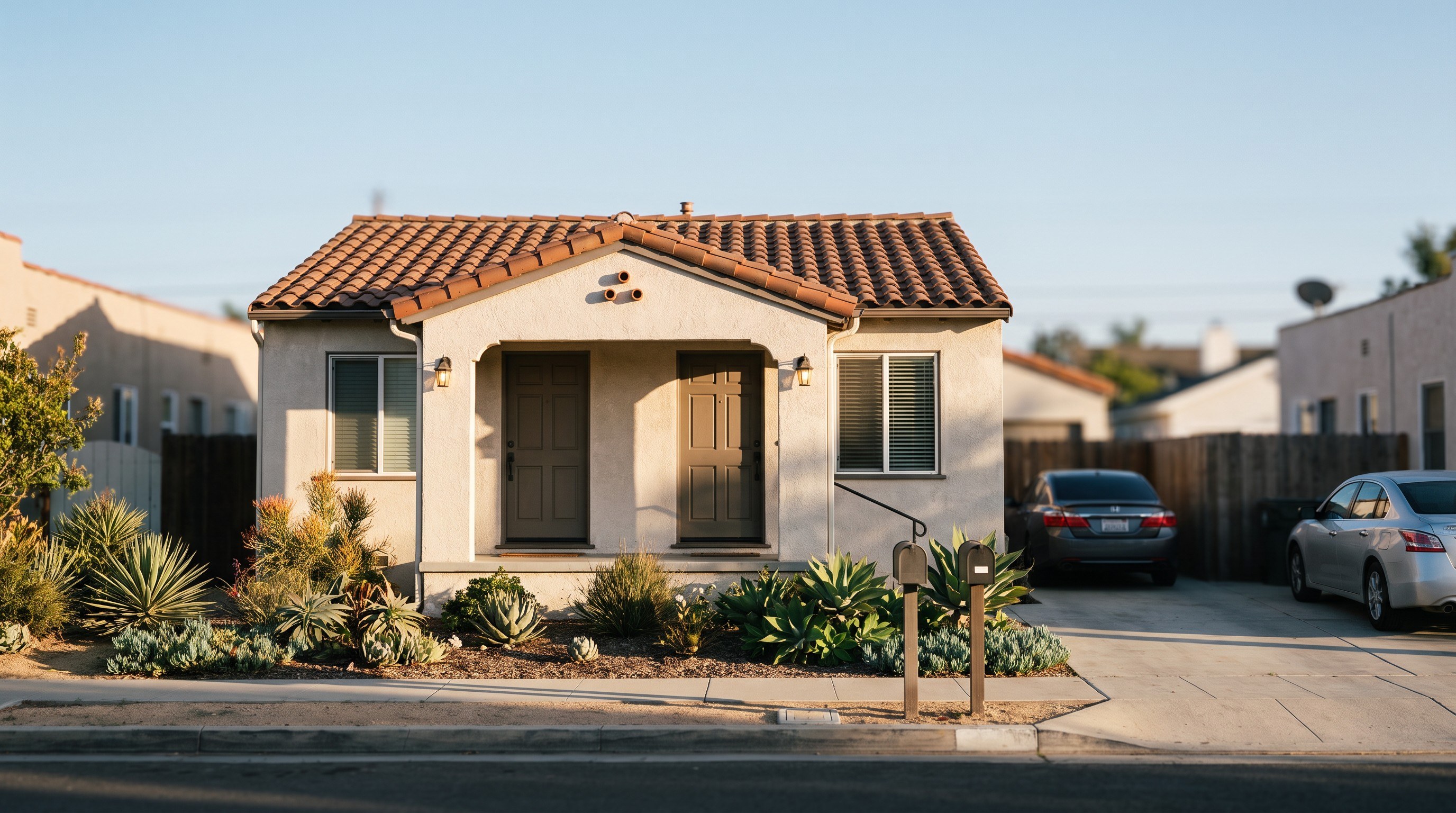
Where Our Lane Starts and Stops
Plain up front so nobody wastes time: we help you buy and sell the property. We do not lease it or manage it.
No tenant placement, no leases, no rent collection, no repair calls. When you own it, we introduce you to the management company we refer these to and they take it from there.
We would rather tell you that now than have you find out later. What we are good at is the acquisition: reading the numbers honestly, spotting what will quietly eat the return, and telling you when to walk away.
Let's talk about your next move
Run the Numbers Before You Fall for the Property
An investment only works if the math works, and the math is unforgiving in a market at these prices.
The monthly picture is mortgage, property taxes, insurance, HOA dues, Mello-Roos if the tract has it, and management fees. Then a reserve for repairs and the months between tenants, which is the line most first-time investors leave out and then feel.
Financing is different too. Investment property loans generally want a larger down payment and carry a higher rate than a loan on the home you live in. Talk to a lender early, and we are glad to introduce you to lenders we trust.
We will help you estimate what a property could rent for, and we will tell you to confirm it with the property manager you plan to use. They see real rents and real vacancy every day. We do not, and pretending otherwise would not serve you.
The HOA Question, and What California Law Actually Says
If the property is in an association, this decides whether your plan is even legal. California law is more on your side than most buyers realize.
Under Civil Code 4741, an HOA cannot flatly ban rentals or unreasonably restrict them. It can cap the number of rented units, but not below 25 percent of the units in the association. It can still ban true short-term rentals of 30 days or less.
Associations were required to strip unlawful rental bans out of their CC&Rs by December 31, 2021 under AB 3182, though plenty of older documents still carry the old language.
One catch that matters: a new restriction generally applies only to owners who buy after it takes effect, so when it was adopted matters. Before you write, read the current CC&Rs and ask the HOA where the rental cap stands today. We will get you those documents.

Rent Rules in This Valley
The city of Santa Clarita has no local rent control ordinance and no city rent board. Inside the city limits the state law is what applies. That is AB 1482, and it caps annual increases at 5 percent plus regional CPI, with a hard ceiling of 10 percent.
The exemptions are what usually matter here. Single-family homes and condominiums are generally exempt, and the exemption lives in AB 1482 itself at Civil Code 1947.12(d)(5), not in Costa-Hawkins. People mix those two up constantly. Two things have to be true: the owner cannot be a corporation, a real estate investment trust, or an LLC with a corporate member, and you have to hand the tenant the specific written exemption notice the statute spells out. Skip that notice and the cap applies to you anyway, which is an expensive way to learn a rule.
Anything built in the last 15 years is exempt too, and that one rolls forward. A property that was exempt the year you bought it stops being exempt on its fifteenth birthday, so build that into a hold you plan to keep.
Here is the part buyers in this valley miss. Castaic and Stevenson Ranch are unincorporated Los Angeles County, not the city of Santa Clarita, and the county runs its own Rent Stabilization Ordinance. It does not reach single-family homes or condos. It reaches buildings with two or more units whose certificate of occupancy is dated on or before February 1, 1995, and it brings a CPI-based cap the county resets, plus registration and just cause requirements of its own. If you are looking at a duplex or a small building out there, that ordinance sets your rent math, not AB 1482. Confirm the parcel's jurisdiction before you write an offer, because the address alone will not tell you.
This is exactly the sort of detail a good property manager handles for you, which is another argument for using one.
Rent Rules in This Valley
Light across a floor with nothing on it
What Quietly Eats the Return
Before you write an offer, we look hard at the things that do not show up in a rent estimate:
- HOA dues and Mello-Roos. Fixed monthly costs that do not care whether the unit is occupied.
- Roof and major systems age. A roof at year 22 is a capital expense wearing a disguise.
- Repairs a tenant notices on day one. These get fixed on your dime or cost you the tenant.
- Insurance. In a high fire hazard severity zone this can be multiples of what you assumed, and it is the line that turns a working pro forma into a losing one.
- What makes a home easy to rent. Freeway access, parking, a garage, laundry hookups, a layout that works for everyday living.
We would rather you walk away from the wrong property than own a headache.

Taxes, Depreciation, and the 1031 Clock
Talk to a CPA who works with rental owners before you buy, not at tax time.
Broadly: rental income is taxable, but you generally deduct mortgage interest, property taxes, insurance, repairs, management fees, and depreciation on the building. Depreciation surprises people because it is a paper deduction that costs you no cash. The other side is that it gets recaptured when you sell, taxed at up to 25 percent. Deferred, not free.
If you are selling one investment property to buy another, a 1031 exchange defers the gain, and the timelines are strict and run concurrently, not back to back. From the day your sale closes you have 45 days to identify replacement property in writing and 180 days total to close. You cannot touch the money; it goes through a qualified intermediary set up before your sale closes. It does not apply to a home you live in.
Also ask your CPA and attorney how you will hold title before you close. That choice affects taxes and liability later.

After You Close
The day you get the keys is where our part wraps and the property manager's begins. We will introduce you to the management company we refer these to, so owning a rental does not turn into a second job.
And when you eventually sell, or buy the next one, we are here for that. That part we do very well.
See where we work, or send your criteria through our custom home search.

Talk It Through With Us
Thinking about your first rental, or adding another? Call or text us at 661-219-5517. We'll talk through your goals and help you decide if now is the right time to buy.
This page is general information, not legal, tax, or financial advice. Please confirm your situation with a CPA, attorney, or lender.
Talk It Through With Us
Breakfast, most days
Frequently Asked Questions
Do you manage rental properties?
Can you help me find a place to rent?
How is financing an investment property different?
Can I use a 1031 exchange to buy my next rental?
What costs should I plan for besides the mortgage?
Are there tax benefits to owning a rental?
Which part of the Santa Clarita Valley is best for a rental?
Keep exploring
Ready to make your move with Dubner Real Estate Group?

Meet the team
You would be working with our team
We are Michelle and Jon Dubner, husband and wife, and Dubner Real Estate Group is ours. Our team is here to serve you: to understand what you are hoping for, walk you through it step by step, and make sure you get there. Michelle answers her own phone and is quickest by text, so ask us anything, at any point, however small it feels.
Michelle Dubner DRE #01496647 Jon Dubner DRE #02118617 Equity Union